
There is a small window in Lake Stevens when an outdoor home project can feel relatively straightforward. The days are still long, homeowners can see their rooflines clearly in the evening, and fall’s wetter pattern has not fully taken over. For homeowners considering permanent lighting , that window deserves attention.
The reason has less to do with getting lights ready for a particular holiday and more to do with the installation itself. Permanent lighting becomes part of your home’s exterior, so placement, roofline access, electrical planning, and nearby exterior projects all matter. Getting those details right before wetter conditions become more frequent can make the entire project easier to plan.
Why Is Permanent Lighting in Lake Stevens Worth Planning Before Wetter Weather?
Think about permanent lighting as an exterior improvement rather than seasonal decorating.
A professional installation requires decisions about where the lighting should run, how it should follow architectural lines, where different sections connect, and how installers can reach each part of the home safely.
Now add persistent moisture to the equation.
Wet walkways, damp roof edges, slick surfaces, and changing weather can affect exterior work. That does not mean permanent lights cannot be installed during wetter periods. It simply means homeowners may have less flexibility when conditions become unpredictable.
Planning during the transition from summer toward fall gives you an opportunity to address the property itself before installation day.
That preparation is where homeowners can make a meaningful difference.
What Should You Check Around Your Roofline Before Installation?
Your roofline is more than a place to attach lights.
It includes fascia, soffits, eaves, gutters, peaks, corners, trim, and transitions between different roof sections. These features determine how an exterior lighting layout will look and where components can be positioned.
Before installation, take a look around the house from several angles.
You do not need to climb onto the roof. In fact, homeowners should leave elevated inspections to qualified professionals. Instead, look for visible concerns from the ground.
Pay attention to:
- Loose or visibly damaged trim
- Sagging or damaged gutter sections
- Peeling exterior paint near the eaves
- Branches touching or hanging directly over the roofline
- Areas where previous exterior work remains unfinished
- Planned roofing, gutter, or painting projects
- Unusual roofline sections that may require a customized lighting approach
A professional installer can then evaluate the actual mounting areas and determine an appropriate lighting layout.
Addressing exterior work in the right order can prevent unnecessary complications later.
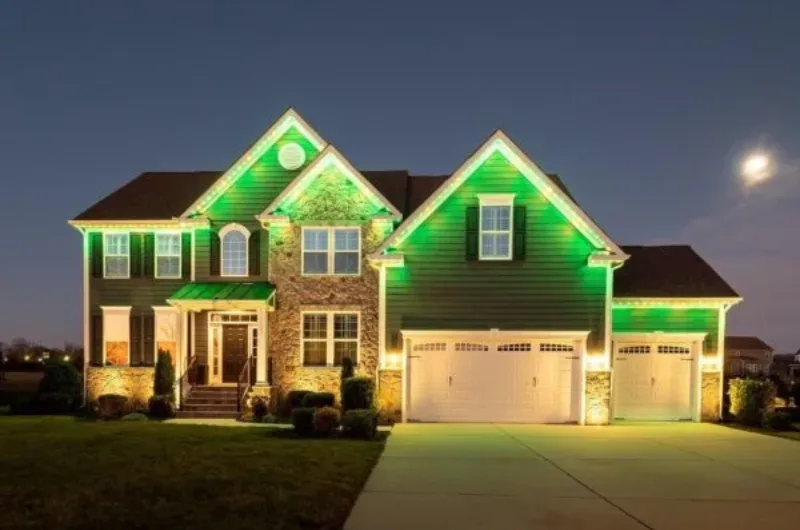
Should Other Exterior Projects Come Before Permanent Lighting?
This is one of the most useful questions homeowners can ask, yet it is easy to overlook.
Suppose you plan to repaint fascia boards next month. Installing permanent lights first may complicate the painting project. The same principle can apply if you expect significant roofline repairs, gutter replacement, or other work around the mounting area.
Permanent lighting should fit into your broader home maintenance plan.
Before scheduling installation, consider whether you expect to complete:
Roof repairs or replacement
If roofing work will affect edges, flashing, fascia, or other areas near the proposed lighting path, discuss the sequence with both contractors.
Gutter replacement
Depending on your home’s design and lighting placement, gutter work may affect access around sections of the roofline.
Exterior painting
Painting fascia, soffits, or trim before lighting installation may create a cleaner project sequence.
Tree trimming
Branches close to the house can restrict access and create ongoing contact with exterior components.
Exterior remodeling
New trim, additions, porch work, or changes to roof features may alter the final lighting layout.
Taking care of these decisions first can help the permanent lighting installation match the finished version of your home rather than a section you intend to change shortly afterward.
Why Does Roofline Design Matter More Than Most Homeowners Expect?
Two Lake Stevens houses can sit on the same street and require completely different lighting plans.
A simple single-story roofline may offer relatively straightforward access. A two-story home with multiple peaks, dormers, valleys, covered entries, and changing elevations presents a different challenge.
This is why estimating a permanent lighting project only by looking at the front width of the house can be misleading.
Professionals need to consider how the lighting will move across architectural transitions.
For example, where should one illuminated section stop? Should another roof peak continue the same visual line? Will a small section look disconnected at night? Can installers access every proposed mounting area appropriately?
These are design and installation questions, not simply product questions.
A site-specific assessment allows Rusty’s Holiday Lights to evaluate the actual structure rather than applying the same layout to every property.
What Does Lake Stevens’ Tree Cover Have to Do With Installation?
Many Lake Stevens properties have mature trees, tall evergreens, or dense landscaping close to the home.
Trees add character and privacy, but they can also influence exterior project planning.
Branches may restrict ladder positioning or access to certain roof edges. Needles, leaves, and small debris can collect around gutters and roof transitions. Dense landscaping may also limit where equipment can be positioned safely.
Homeowners considering permanent roofline lighting should look at vegetation around the house before installation day.
You may not need major trimming. However, branches that physically contact the house or significantly restrict access deserve attention.
This is particularly useful to address before wetter months, when fallen leaves, wet vegetation, and saturated ground can make exterior access less convenient.
How Can Longer Daylight Help You Make Better Lighting Decisions?
Late summer offers another advantage that has nothing to do with rainfall.
Daylight gives you more time to study your house.
Walk across the street or to different parts of your property and look at the roofline. Which architectural features naturally catch your eye? Which sections disappear from common viewing angles? Where would a continuous lighting run make sense?
Then look again as daylight fades.
Permanent exterior lighting needs to work with the architecture from multiple perspectives, not simply look good from directly in front of the garage.
A thoughtful assessment can help determine whether lighting should emphasize:
- Front-facing roof peaks
- Entry features
- Long eave sections
- Secondary rooflines
- Architectural transitions
- Areas visible from the street
- Sections visible from outdoor living spaces
This planning stage can help prevent a common problem: deciding where the lights should go only after installation has already begun.
Why Is an Installation Plan Better Than Simply Choosing a Lighting Package?
Products matter, but the installation plan determines how naturally the finished system fits the house.
A homeowner may initially focus on the number of lights or linear footage. A professional installer looks beyond those numbers.
Where does the run begin?
Where can components be positioned without creating a cluttered appearance?
How should the lighting transition around corners?
What happens when one roof section sits considerably higher than another?
How does the design appear from the driveway compared with the street?
These questions become especially important on larger Lake Stevens homes with multiple roof elevations.
Professional permanent lighting installation should account for the individual structure instead of forcing every house into a predetermined layout.
Could Waiting Until Fall Create Scheduling Challenges?
Possibly.
The issue is not that a particular calendar date suddenly makes installation impossible. Exterior contractors work throughout different seasons.
The challenge comes from having several variables at once.
You may have your own work schedule. The installer has available appointment windows. Your property may need preparation. Then weather can affect suitable working conditions.
When you start earlier, you generally have more room to coordinate those variables.
Waiting until you want the lighting immediately removes some of that flexibility.
For homeowners already considering the project, requesting an assessment before the wetter stretch arrives can help answer practical questions without committing to a rushed timeline.
What Questions Should You Ask During a Permanent Lighting Consultation?
A useful consultation should focus on your property rather than simply presenting product features.
Ask questions that reveal how the installer approaches the project.
For example:
- Which roofline sections would you recommend lighting?
- Are there areas you would leave unlit and why?
- Does anything around my fascia or gutters need attention first?
- Will planned exterior maintenance affect the installation?
- How will the system follow corners and roofline changes?
- Where will the necessary components be positioned?
- How will the installation look from common viewing angles?
- Is any tree trimming or property preparation recommended?
- How long should I allow for the installation process?
- What should I know before the scheduled installation day?
Clear answers can tell you considerably more than a list of lighting specifications.
They also help you understand whether the proposed system has actually been planned around your home.
What Can You Do Now to Prepare Your Lake Stevens Home?
Preparation does not need to become another major project.
Start by walking around the property during daylight. Identify exterior work you already know needs attention. Think about whether you expect roofing, gutter, painting, or remodeling work in the near future.
Next, consider where you actually want permanent lighting.
Do you want only the most visible front roofline? Are side elevations important? Is there an entry feature you want included? Which parts of the house can visitors see when approaching the property?
You do not need final answers.
The goal is to arrive at a professional consultation with a basic understanding of your priorities.
From there, an experienced installer can identify practical options and point out details that may not be obvious from the ground.
So, Should You Install Before Lake Stevens’ Wetter Months Arrive?
If permanent lighting is already something you plan to add, there is a strong practical argument for beginning the process before wetter conditions become more frequent.
Not because the lights need to beat a holiday deadline.
Not because installation suddenly becomes impossible after summer.
The advantage comes from having time.
You have time to evaluate the roofline, coordinate other exterior projects, address access concerns, consider tree clearance, compare layout options, and schedule the work without unnecessary pressure.
That is a much better foundation for a permanent exterior improvement.
Frequently Asked Questions
Does my roofline need to be completely dry for permanent lighting installation?
Suitable conditions depend on the property and installation circumstances. Professional installers should determine when exterior surfaces and access conditions allow work to proceed safely.
Should I replace my gutters before installing permanent lights?
If gutter replacement is already planned and could affect the lighting area, discuss the project sequence with your lighting installer before work begins.
Should trees be trimmed before permanent lighting installation?
Branches that contact the house or restrict access may need attention. Ask the installer to identify potential access concerns during the assessment.
Can permanent lighting be installed on a home with several roof peaks?
Yes, but complex rooflines require careful planning to create balanced transitions and determine appropriate installation access.
How early should I start planning permanent lighting in Lake Stevens?
Starting before you have a firm deadline gives you more flexibility to evaluate the roofline, coordinate exterior maintenance, review the proposed layout, and choose an appropriate installation window.
Plan the Roofline Before the Rain Sets the Schedule
A successful permanent lighting project starts before the first light goes onto the house. It starts with understanding the roofline, identifying potential obstacles, sequencing other exterior work correctly, and creating a layout that suits the property.
If you are considering permanent lighting in Lake Stevens, Rusty’s Holiday Lights can evaluate your home’s roofline and help you build an installation plan around its actual structure. Scheduling a consultation at 425-374-1603 before the wetter stretch of the year gives you more time to make informed decisions and prepare the property properly.