
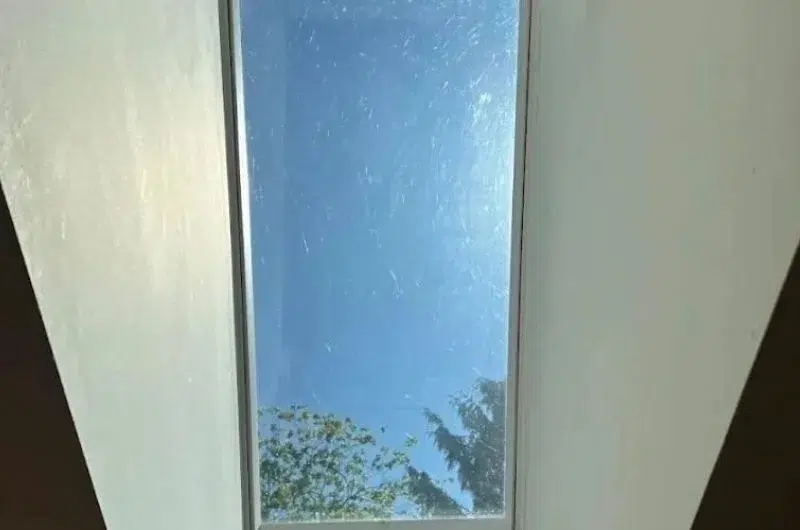
You might expect rain to rinse your skylight windows clean, but that is not always what happens. In Lake Stevens, rain can leave behind water spots, dirt, pollen, and other residue that becomes more noticeable once the glass dries. Because skylights are exposed to the elements and are often harder to reach than standard windows, keeping them clear can take more than waiting for the next rainy day. If your skylights still look cloudy or streaked after rainfall, professional skylight window cleaning near Lake Stevens can help restore a clearer view and more natural light.
Why Doesn’t Rain Actually Clean Skylight Windows?
Rain can remove some loose surface dirt, but it does not provide the same controlled cleaning as professional window washing. Water running across the glass can pick up dirt and leave it behind as it evaporates.
Rainwater can also carry particles from the surrounding environment. When the water dries, those particles can remain on the glass as spots or a thin film. Repeated cycles of wet and dry weather can make the buildup more noticeable over time.
The angle and position of a skylight can also affect how water behaves on its surface. Some areas may receive a good amount of rain while still retaining residue around edges and other areas of the glass.
This is why a skylight can look wet and clean during a rainstorm but appear cloudy again once the glass dries.
What Makes Skylight Windows Look Dirty in Lake Stevens?
Local conditions can contribute to the buildup that homeowners notice on skylights. Lake Stevens properties are exposed to changing weather throughout the year, along with outdoor debris that can settle on exterior glass.
Pollen and airborne debris
Pollen and fine outdoor particles can settle on skylights. When moisture reaches the glass, those particles can become part of a residue that remains after the surface dries.
Water spots and mineral residue
Water that dries naturally can leave behind spots or mineral residue. Over time, repeated exposure can make the glass look dull even when there is no heavy layer of visible dirt.
Dust and general grime
Skylights are exposed to the same outdoor environment as other exterior windows. Dust, dirt and other airborne material can accumulate on the surface between cleanings.
Moisture and organic buildup
Damp conditions can contribute to buildup around exterior surfaces. Skylights located near trees or other vegetation may also collect more outdoor debris.
The result can be glass that looks hazy, streaked or spotted even after several rainy days.
Does Dirty Skylight Glass Reduce the Natural Light Inside?
A dirty skylight can reduce the amount of natural light that passes through, especially once residue, spots, or a layer of grime covers a significant portion of the glass. The difference is often most noticeable when comparing a recently cleaned skylight to one that has accumulated months of outdoor residue.
Many skylights have coated or tinted glass designed to manage heat and UV exposure, and cleaning methods that are too harsh can affect that coating over time. A cleaning approach suited to the specific glass and frame material, along with safe access to an elevated surface, matters as much as how often the skylight gets cleaned.
Why Are Skylights Harder to Keep Clean Than Regular Windows?
One reason homeowners often overlook skylight cleaning is accessibility.
A standard window may be easy to reach from inside or outside the home. A skylight is often positioned above the living space, making the exterior surface more difficult to access safely.
The location can also make it difficult to see exactly what is causing the glass to look dirty. From the ground or from inside the room, homeowners may notice that the skylight looks cloudy without being able to identify whether the problem is dust, water residue, pollen or another type of buildup.
Trying to reach an elevated skylight without the appropriate equipment can also create unnecessary safety concerns.
Professional cleaning provides a way to address the glass without treating the job like an ordinary ground-level window.
When Should Lake Stevens Homeowners Have Skylights Cleaned?
There is no single cleaning schedule that works for every property. The right timing depends on factors such as the skylight’s location, surrounding trees, exposure to outdoor debris and how quickly residue becomes noticeable.
A skylight may need attention when you notice cloudy or hazy glass, water spots that remain after rain, streaking, or a noticeable difference in clarity compared to nearby windows that have recently been cleaned.
One distinction worth knowing before scheduling a cleaning: surface dirt and residue on the outside of the glass is what cleaning actually addresses. If a double-pane skylight shows cloudiness or what looks like moisture trapped between the panes themselves, that usually points to a failed seal rather than surface buildup, and cleaning will not fix it. A professional can tell the difference during an inspection if you are not sure which you are looking at.
Seasonal exterior cleaning can also be a practical time to address skylights. If you are already arranging other exterior cleaning services, including skylight cleaning can help keep more of the home’s glass surfaces looking consistent.
What Does Professional Skylight Window Cleaning Near Lake Stevens Involve?
Professional skylight cleaning focuses on safely accessing and cleaning the glass rather than simply spraying it with water.
The cleaning process can address visible dirt, residue and other buildup on the skylight surface. Depending on the skylight’s location and condition, the work may involve specialized equipment and techniques suited to elevated glass.
Rusty’s Window Cleaning provides skylight cleaning as part of its exterior window cleaning services in the Lake Stevens area. The company also provides residential and commercial window cleaning, allowing homeowners to address skylights alongside other window-cleaning needs.
If your skylights continue to look dirty after rainfall, skylight window cleaning near Lake Stevens can be a practical way to deal with buildup that rain alone has not removed.
Questions Lake Stevens Homeowners Ask About Skylight Cleaning
Does rain clean skylight windows?
Rain can rinse away some loose dirt, but it can also leave water spots and residue behind as it dries. Rain should not be considered a replacement for professional skylight cleaning.
How often should skylight windows be cleaned?
The appropriate frequency depends on the property’s exposure to rain, pollen, trees, dust and other outdoor debris. Cleaning when visible buildup develops is a practical approach.
Can skylights be cleaned along with regular windows?
Yes. Skylight cleaning can be included when arranging professional window cleaning, depending on accessibility and the scope of the service.
Why do my skylights look cloudy after rain?
Rainwater can carry dirt and airborne particles onto the glass. When the water evaporates, residue can remain and create a cloudy or spotted appearance.
Is skylight cleaning different from regular window cleaning?
Skylights can require different access and equipment because they are often positioned above the normal reach of homeowners. The cleaning itself needs to account for the location and condition of the glass.
Can I clean my skylights myself?
If a skylight is difficult or elevated, accessing the exterior glass can create a safety concern. Professional cleaning is a safer option when the glass cannot be reached securely.
Keep Your Skylights Clear in Lake Stevens
Rain may make your skylights look clean temporarily, but it does not necessarily remove the residue that builds up on exterior glass. If your skylights remain spotted, cloudy or streaked after rainfall, professional cleaning can help restore a clearer surface.
Rusty’s Window Cleaning provides professional skylight window cleaning near Lake Stevens along with residential and commercial window cleaning and other exterior cleaning services. Contact Rusty’s Window Cleaning at 425-374-1603 to discuss your skylight cleaning needs and determine the appropriate service for your property.