
A lot of homeowners comparing landscape lighting companies in Lake Stevens start the conversation by picking a style: warm white, color-changing, roofline only, or something more elaborate. That’s a reasonable place to start, but it usually isn’t the first thing that actually determines where a permanent lighting system can go. On most established Lake Stevens lots, the tree canopy decides that first.
Mature evergreens and tall deciduous trees are common across the city’s older, more established neighborhoods, and they change more about a permanent lighting install than most homeowners expect going in.
Why Tree Cover Is the First Thing to Look At, Not an Afterthought
Permanent lighting systems are mounted once and left in place for years, which means the install has to account for how a property actually looks and functions across every season, not just how it looks the day the crew shows up.
A roofline shaded by deciduous trees in July can become fully exposed by October once the leaves are down, or the reverse can happen on a lot where evergreens provide the heavier coverage. Evergreens hold their coverage year-round, which creates a more consistent but also more permanent obstruction to work around. Either way, tree cover isn’t a minor site detail. It’s one of the first things that shapes where the system actually goes.
How Canopy Coverage Affects Fixture Placement
Heavy canopy overhead changes where fixtures can be mounted without interference from branches, needles, and seasonal debris. A roofline section directly beneath a large tree is more likely to collect debris on and around the fixtures over time, which affects both appearance and long-term maintenance.
It also affects visibility. A beautifully lit roofline section that’s mostly obscured by branches from the street or driveway won’t read the way it would on a more open lot. Part of a proper site evaluation is identifying which sections of a home’s architecture are actually visible year-round, and which are effectively hidden by canopy for most of the year.
Why Falling Debris Matters More Than People Expect
Needles, leaves, sap, and small branches falling onto a lighting system aren’t just a cosmetic issue. Debris that collects around fixtures and wiring channels can affect how well a system sheds water, and repeated buildup in the same spot season after season is worth planning around rather than dealing with after installation.
This is part of why a system designed for a heavily wooded Lake Stevens lot often looks different from one designed for a more open property, even on homes with similar architecture. The design has to account for where debris will actually accumulate, not just where the roofline looks best on paper.
How This Changes the Actual Design, Not Just the Installation
On a lot with significant tree cover, the strongest design usually works with the shade pattern instead of trying to override it. A roofline section that’s largely hidden by branches for most of the year often isn’t worth emphasizing as a focal point, even if it would be a strong choice on an open lot. Meanwhile, a section that stays visible year-round, often the peak or gable facing the street or driveway, becomes a more logical place to put the strongest visual emphasis.
This is a different design conversation than choosing colors or brightness. It starts with what’s actually visible and accessible on that specific property, given its specific tree cover, rather than applying a generic layout and adjusting afterward.
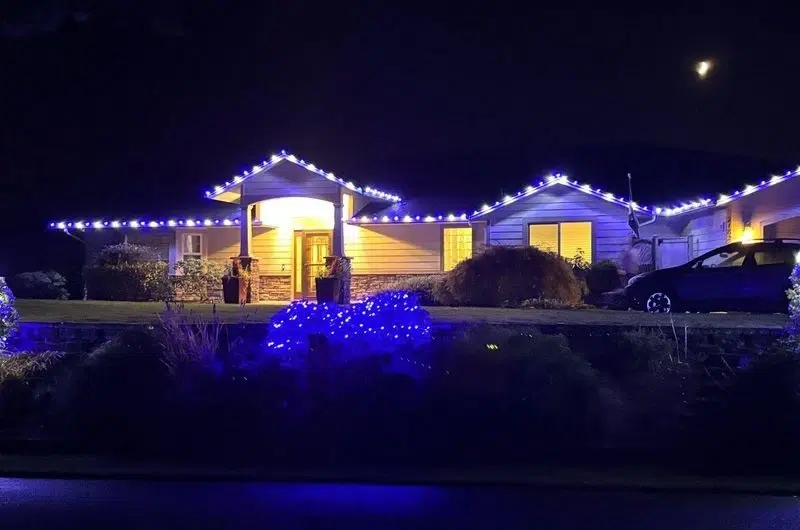
What to Ask Before Hiring Anyone for Permanent Outdoor Lighting
Homeowners comparing residential outdoor lighting companies near Lake Stevens should ask a few practical questions before deciding who does the work.
Ask whether the company evaluates the property’s actual tree cover and shade pattern as part of the design process, rather than defaulting to the same layout on every home. Ask how the system is protected from debris buildup in wooded areas, since that affects long-term maintenance more than most homeowners expect. Ask what qualifications the installer holds for exterior electrical work and whether the specific installation requires a permit, since requirements can vary depending on the scope of the work. And ask what maintenance access looks like once the system is installed, particularly on sections of roofline that are harder to reach because of overhanging branches.
Evergreen vs. Deciduous Cover: Why the Distinction Matters
Not all tree cover behaves the same way across the year, and the type of trees on a property changes the planning conversation. Evergreens hold their needles year-round, which means the shade and debris pattern they create stays fairly constant across every season. That consistency can actually make planning simpler in some ways, since there isn’t a seasonal shift to account for.
Deciduous trees are less predictable. A roofline that sits in heavy shade through summer can be fully exposed by late fall once the leaves are down, and the reverse is true heading into spring. A property with a mix of both types often needs the design to account for how the balance of light and shade actually shifts through the year, rather than assuming whatever the site looks like on the day of installation is how it will look every month after.
Signs Your Property May Need a Closer Look Before Installation
A few property characteristics are worth flagging before a design gets finalized. Rooflines that sit directly beneath large branches, rather than simply near them, are more likely to need debris-conscious fixture placement. Homes where the same section of roof or gutter line consistently collects needles or leaves each season are showing exactly where a lighting system would face the same buildup. And properties where certain elevations are only visible from specific angles on the street, rather than from most approaches, benefit from a design that prioritizes those visible sections rather than spreading emphasis evenly across the whole house.
Frequently Asked Questions
Does heavy tree cover mean permanent lighting isn’t a good fit for my property?
Not usually. It typically means the design needs to account for which sections of the house stay visible and accessible year-round, rather than treating every roofline section the same way.
Will falling leaves and needles damage a permanent lighting system?
Ongoing debris buildup can affect how a system sheds water and how much maintenance it needs over time, which is why fixture placement should account for where debris is likely to collect.
Should I remove or trim trees before installing permanent lighting?
Not necessarily. In most cases, the design can work around existing tree cover rather than requiring changes to established landscaping.
Does shade from trees affect how bright or visible the lighting looks at night?
It can, though the mechanism is different at night than during the day. Shade affects how much daylight a section gets, but it doesn’t change how a light source looks after dark. What matters at night is whether branches or foliage are physically positioned in front of a fixture, blocking the view of it from certain angles. That’s why a clear line of sight to each fixture matters during planning, not just how bright the fixture itself is.
How is this different from seasonal holiday lighting on the same house?
Permanent lighting stays installed year-round, so it has to hold up to every season’s tree cover and debris pattern, not just the weeks it would be up for a holiday display.
Plan Permanent Roofline Lighting Around Your Property, Not a Generic Layout
A Lake Stevens home with mature trees needs a different approach than an open lot, and that starts with understanding what’s actually visible and accessible on that specific property before any fixtures go up. Rusty’s Holiday Lights evaluates each property’s tree cover and shade pattern as part of the design process for permanent outdoor lighting.
Call 425-374-1603 anytime, or reach out through our contact form.